Wallingford Moving Guide
Century-old Craftsman homes, a fast-changing Stone Way corridor, and a neighborhood built around walking, not driving. Here's your insider guide to moving in Wallingford.
Wallingford sits on the hill above the north shore of Lake Union, between Fremont and the University District — close enough to downtown to feel central, quiet enough to still feel like a neighborhood of front porches. It's one of the most walkable parts of Seattle (Walk Score 84), built a century ago as a streetcar suburb, and it still shows: block after block of Craftsman and foursquare houses from the 1900s–1920s.
What's changed is Stone Way N, the street forming Wallingford's western edge with Fremont. Years of upzoning have turned it into a corridor of 5- and 6-story apartment buildings, which means the moving logistics now split sharply in two — a century-old house with a narrow basement stairway on one block, a brand-new elevator building with a loading dock reservation system on the next. Here's what to expect from either one.
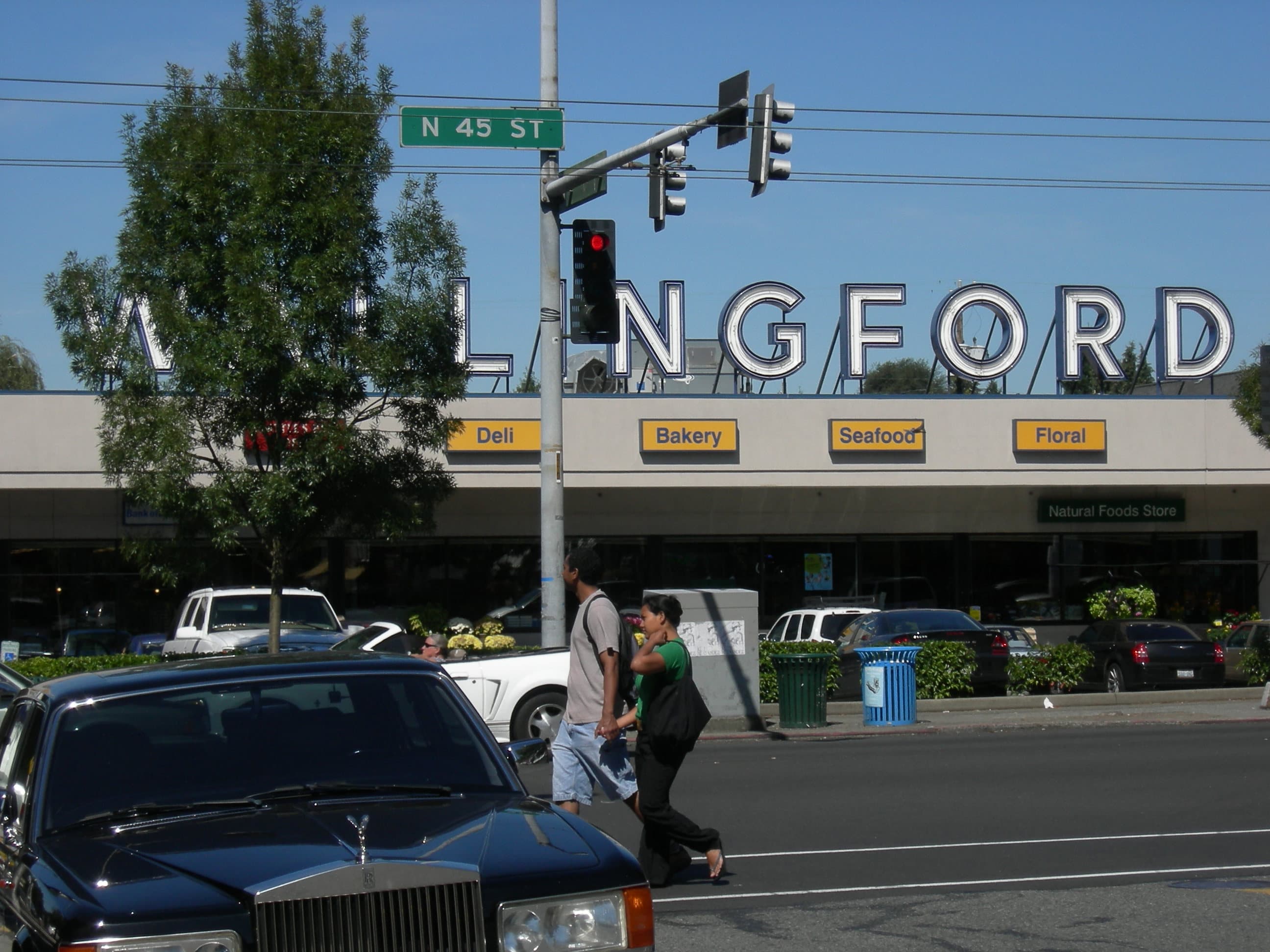
Photo: Joe Mabel, CC BY-SA 3.0, via Wikimedia Commons
Why Wallingford Moves Are Unique
Stone Way Construction
Wallingford's western edge along Stone Way N has been under near-continuous redevelopment for years — new apartment buildings mean cranes, temporary lane closures, and construction vehicles competing for curb space.
Century-Old Housing Stock
Most of the neighborhood was built out as a streetcar suburb in the 1900s–1920s. That means real basements, narrow original stairways, and in many cases no off-street parking at all — very different logistics from a modern building.
Weekend Park Traffic
Gas Works Park and the Burke-Gilman Trail draw crowds on nice weekends, and that overflow parking lands on the residential streets closest to the water. A Saturday move near the south end of the neighborhood gets harder by the hour.
I-5 Edge Effects
Wallingford's eastern boundary runs along I-5. Blocks near the freeway see commuter park-and-walk activity on weekdays, which can eat into street parking you were counting on for a moving truck.
Wallingford Building Types & What to Expect
🏠 Craftsman & Foursquare Houses (1905–1920s)
The classic Wallingford home — a full basement, a narrow original staircase, and often a detached garage or none at all. Street parking is the default, not the exception, on most residential blocks.
Moving difficulty: ⭐⭐ (Low–Medium) — Straightforward truck access, but budget extra time for a full basement and any original narrow stairways.
🏢 Stone Way New Construction (2010s–Present)
Five- and six-story mixed-use buildings along Stone Way N, most with elevators and ground-floor retail. Loading zones are often shared with the corridor's restaurant and retail deliveries, so timing matters.
Moving difficulty: ⭐⭐ (Low–Medium) — Elevator access helps a lot, but reserve it ahead and confirm the loading zone isn't double-booked.
🧱 Streetcar-Era Walk-Ups (Wallingford–Meridian Historic District)
Brick apartment buildings from the early 1900s, concentrated around the Meridian and Good Shepherd Center area near I-5. Two to four stories, narrow stairwells, frequently no elevator.
Moving difficulty: ⭐⭐⭐ (Medium) — No elevator plus narrow, older stairwells means a slower move than a comparable modern building.
🏘️ Townhomes & Infill (2000s–Present)
Narrow-lot townhomes built on subdivided single-family lots, scattered throughout the neighborhood. Three floors, tight footprint, usually a one-car garage that won't fit a moving truck.
Moving difficulty: ⭐⭐⭐ (Medium) — Three floors of stairs with a narrow layout. A 3-person crew moves noticeably faster than two.
The Biggest Wallingford Moving Challenges
1. Stone Way Redevelopment
Stone Way N has been one of Seattle's most active redevelopment corridors for years, and it's not done. New buildings mean shifting lane closures, blocked curb space, and construction traffic that can change week to week.
How to handle it: Drive your route a few days before the move and check current construction. If your building is directly on Stone Way, confirm with your building manager exactly where a moving truck is allowed to stage.
2. Gas Works Park & Burke-Gilman Weekend Crowds
On any nice weekend, Gas Works Park and the Burke-Gilman Trail pull in visitors from across the city — and their cars fill up the residential streets closest to the water long before noon.
How to handle it: If you're near the south end of the neighborhood, move on a weekday or start at first light on a weekend, before the park traffic arrives.
3. No Off-Street Parking on Older Blocks
Many of Wallingford's Craftsman-era homes were built before cars were assumed — no driveway, no garage, just the curb. On a narrow street, that can mean a longer carry from truck to door than you'd expect.
How to handle it: Scout parking on your actual block a day ahead. If it's tight, ask a neighbor to hold a spot, or check whether a temporary no-parking permit makes sense for moving day.
4. I-5 Commuter Spillover
Blocks near the eastern edge of Wallingford, close to I-5, see weekday commuters parking and walking the rest of the way to work or the bus. That competition for curb space is easy to miss until moving day.
How to handle it: If your address is within a few blocks of I-5, plan for the truck to arrive before the morning commute fills the street, or budget time to circle for a spot.
Wallingford Areas — Quick Guide
45th Street Core
The commercial heart of the neighborhood — Wallingford Center, shops, restaurants, and the original Dick's Drive-In. Busiest for both traffic and parking; a weekday morning move is noticeably easier here.
Stone Way Corridor (Fremont border)
The newest, most apartment-heavy part of Wallingford, and the most likely to have active construction nearby. Most buildings here have elevators, which helps offset the construction hassle.
North Wallingford (toward Green Lake)
Quieter, mostly single-family blocks. Easier parking and less through-traffic than the 45th St core — generally the most straightforward moving experience in the neighborhood.
Meridian & Good Shepherd Area (near I-5)
Home to the historic Good Shepherd Center and a concentration of century-old brick walk-up apartments. Watch for commuter parking spillover from I-5 on weekdays.
South Wallingford & Gas Works (toward Lake Union)
Closer to the water, with a gentle downhill grade toward Gas Works Park and some of the best views in the neighborhood. Weekend park traffic is the main complication here.
Moving to or From Wallingford?
We know Wallingford's Craftsman basements, Stone Way construction, and weekend park traffic. Get a free quote within 24 hours, no obligation.
Insider Tips for a Smooth Wallingford Move
Check Stone Way for active construction before you finalize your route
The corridor changes fast — a lane that was open last month might be closed today. Drive it a few days ahead and share any detours with your movers.
Get Stone Way building rules in writing
Elevator reservation process, approved move hours, loading dock rules, and deposit amount — get all of it confirmed with your building manager at least two weeks out.
Avoid Saturday and Sunday if you're near Gas Works Park
Park and Burke-Gilman Trail traffic fills the closest residential streets by mid-morning on any nice weekend. A weekday move, or an early Saturday start, avoids it entirely.
For streetcar-era walk-ups, budget real extra time
No elevator plus narrow, century-old stairwells adds up. Disassemble what you can, and don't schedule back-to-back moves on the same day if this is one of them.
Scout parking on your specific block, not just the neighborhood
Wallingford's parking difficulty varies block by block — a quiet street in North Wallingford and a block near I-5 or 45th are completely different situations. Check the actual block a day ahead.
If you're near I-5, move before the morning commute
Commuter park-and-walk activity picks up on weekday mornings near the freeway edge. An early start means you're not competing for the same curb space.
What a Wallingford Move Actually Costs
Wallingford moves generally track the Seattle average — it's flatter than Queen Anne and less congested than Ballard's core. Older walk-ups without an elevator and any move requiring a parking permit add some cost.
| Move Type | Estimated Cost | Typical Duration |
|---|---|---|
| Studio/1-Bed apartment | $440–$660 | 2–3 hours |
| 2-Bed Stone Way apartment/condo | $915–$1,525 | 3–5 hours |
| Streetcar-era walk-up (no elevator) | $915–$1,525 | 3–5 hours |
| 2-Bed Craftsman house | $915–$1,525 | 3–5 hours |
| 3–4 Bed house | $1,950–$3,120 | 5–8 hours |
Note: No-elevator walk-ups near Meridian and Good Shepherd typically run higher than a Stone Way building with an elevator. If your block needs a temporary parking permit, that's an added out-of-pocket cost. For full Seattle pricing, see our complete cost guide.
Frequently Asked Questions
Is Wallingford a good neighborhood to move to in 2026?▼
Wallingford is one of Seattle's most walkable, consistently in-demand neighborhoods — Craftsman homes, the Wallingford Center shops, Gas Works Park, and the Burke-Gilman Trail all within a mile of most addresses. Trade-offs: competitive street parking near the 45th St core and steady redevelopment along Stone Way.
What's parking like in Wallingford?▼
Tightest around N 45th Street's retail strip and near Gas Works Park / the Burke-Gilman Trail on weekends, when park visitors fill residential blocks. Blocks closest to I-5 also see commuter spillover parking on weekdays. North Wallingford, away from 45th, is noticeably easier.
Do the new Stone Way apartment buildings have move-in rules or deposits?▼
Most do — a move-in window (commonly 9 AM–5 PM), a required elevator reservation, and a refundable deposit in the $200–$500 range. Confirm the exact rules with your building manager at least two weeks out.
When's the best time to move in Wallingford?▼
Weekday mornings. Avoid Saturday and Sunday, when Gas Works Park and the Wallingford Farmers Market draw crowds and eat up nearby parking. Also check for active construction along Stone Way before you finalize your route.
Are Wallingford moves harder than Fremont or Ballard?▼
About the same as Fremont, easier than Ballard's core. Wallingford is mostly flat to gently sloped, with the exception of streets closer to the Lake Union bluff near Gas Works Park. The main complication is parking, not terrain or stairs.
Get Movers Who Know Wallingford
Free quotes from movers experienced with Wallingford's Craftsman basements, Stone Way buildings, and weekend park traffic. No spam, no obligation.
Written by the SeattleMoversGuide team
Local moving industry professionals who know Wallingford's streets, buildings, and parking patterns. From century-old Craftsman homes to brand-new Stone Way apartments — we've moved them all.