Fremont Moving Guide
The Center of the Universe has a drawbridge, a troll, a Sunday market that takes over the streets, and a real mix of century-old walk-ups and converted lofts. Here's your insider guide to moving in Fremont.
Fremont calls itself the "Center of the Universe," and it's earned the nickname — the Troll under the bridge, the Sunday Market, the Lenin statue, Adobe's offices a few blocks from century-old warehouses. It's one of Seattle's most distinct neighborhoods, and a lot of people want to live here.
Moving in or out means dealing with a drawbridge that stops traffic for boats, a weekly market that closes streets April through October, and buildings ranging from 1920s walk-ups to converted industrial lofts. Each has its own logistics — here's what to know.
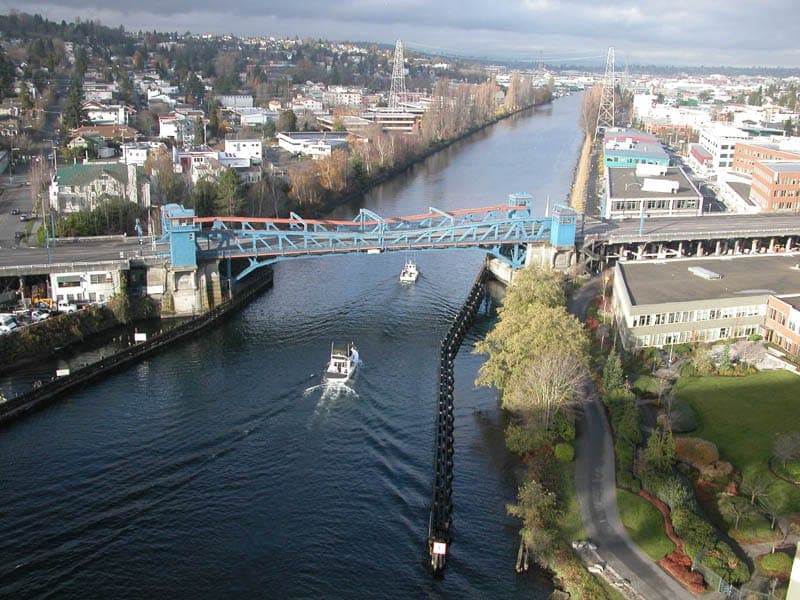
Photo: Shakespeare at English Wikipedia, CC BY-SA 3.0, via Wikimedia Commons
Why Fremont Moves Are Unique
The Drawbridge
The Fremont Bridge opens for boat traffic and can add 10-15 minutes to your route with zero warning. Build in buffer time, especially in summer boating season.
Sunday Market Season
April through October, the Fremont Sunday Market takes over Evanston Ave and surrounding blocks with vendor stalls, food trucks, and foot traffic. Parking and truck access get genuinely difficult.
Converted Industrial Buildings
Fremont was a manufacturing hub, and a lot of old warehouses are now residential lofts. Freight elevator access varies a lot building to building — worth confirming before moving day.
Narrow Residential Streets
Side streets off the main core are often original width from the 1920s — barely two cars wide, with limited legal parking for a moving truck.
Fremont Building Types & What to Expect
🏠 Walk-Up Apartments (1920s–1940s)
Classic 2-3 story buildings scattered through the core and along N 36th St. No elevator, exterior or narrow interior stairways.
Moving difficulty: ⭐⭐ (Low-Medium) — Stairs add time but buildings are usually straightforward otherwise.
🏭 Converted Industrial Lofts
Former warehouses and manufacturing buildings converted to residential. Some have freight elevators (great for moving), others have none at all. High ceilings often mean larger furniture than typical apartments.
Moving difficulty: ⭐⭐ to ⭐⭐⭐ — Varies enormously by building. Confirm elevator access with your building manager before booking movers.
🏢 Newer Mid-Rise Condos
Concentrated near the core and toward the Ship Canal. Standard elevators, sometimes a loading dock, but shared with other residents and deliveries.
Moving difficulty: ⭐⭐ (Low-Medium) — Reserve the elevator ahead of time.
The Biggest Fremont Moving Challenges
1. Bridge Timing
The Fremont Bridge lifts for boat traffic with little notice, and a moving truck stuck waiting for it isn't just annoying — you're paying by the hour.
How to handle it: Check bridge lift schedules at seattle.gov before your move. If your route requires crossing, plan for it and build in buffer time rather than cutting it close.
2. Sunday Market Gridlock
April through October, Sunday in Fremont means street closures, vendor setup starting early morning, and packed parking for blocks around the market.
How to handle it: Avoid Sunday moves during market season entirely if you can. Tuesday through Thursday is dramatically easier.
3. Unclear Elevator Access in Converted Buildings
Not every converted loft building has a working freight elevator, and it's not always obvious from the outside which ones do.
How to handle it: Call your building manager ahead of time and ask specifically about freight/service elevator access and any move-in rules or reservation requirements.
Moving to or From Fremont?
We know Fremont's bridge timing, market schedule, and building quirks. Get a free quote within 24 hours, no obligation.
Insider Tips for a Smooth Fremont Move
Check bridge lift schedules before your move
The Fremont Bridge lift schedule is public — check seattle.gov if your route crosses it, and build in a buffer.
Avoid Sundays April through October
Market season makes Sunday moves genuinely harder — closed streets, no parking, heavy foot traffic near the core.
Confirm freight elevator access ahead of time
If you're in a converted loft building, call ahead. Not knowing until moving day is a common, avoidable mistake.
Watch for narrow side streets
Older residential blocks off the main corridors can be tight — let your movers know if your street is narrow so they can plan truck placement.
Book mid-week for the smoothest experience
Tuesday through Thursday avoids both market crowds and the general weekend moving rush.
What a Fremont Move Actually Costs
Fremont moves are generally in line with Seattle averages. Converted loft buildings without elevator access and Sunday-market-season timing are the main things that can push cost up.
| Move Type | Estimated Cost | Typical Duration |
|---|---|---|
| Studio/1-Bed apartment | $440–$660 | 2–3 hours |
| 2-Bed apartment/condo | $915–$1,525 | 3–5 hours |
| Converted loft (no elevator) | $1,220–$1,830 | 4–6 hours |
| 3+ Bed house | $1,950–$3,120 | 5–8 hours |
Note: Buildings without elevator or freight access add time and cost regardless of neighborhood. For full Seattle pricing, see our complete cost guide.
Frequently Asked Questions
Is Fremont a good neighborhood to move to?▼
Fremont is one of Seattle's most beloved neighborhoods — walkable, quirky, home to the Fremont Troll and Sunday Market, with easy access to Lake Union and the Ship Canal Trail. The trade-offs are bridge traffic and Sunday market crowds affecting move-day logistics.
How does the Fremont Bridge affect moving day?▼
The Fremont Bridge is a drawbridge that opens for boat traffic, adding 10-15 minutes when it's up. It's busiest for boat traffic in summer. Avoid scheduling your move to cross right at the top of the hour when possible, and build in buffer time either way.
What's the Fremont Sunday Market like for moving?▼
April through October, the Fremont Sunday Market turns much of the neighborhood into a pedestrian zone with heavy parking congestion. If you can, avoid Sunday moves during market season — Tuesday through Thursday is far easier.
What kind of buildings does Fremont have?▼
A real mix: 1920s-40s walk-up apartments, converted industrial/warehouse lofts (Fremont was a manufacturing hub), and newer mid-rise condos near the core. Each has different access — walk-ups mean stairs, converted lofts sometimes have freight elevators, newer buildings usually have standard elevators and loading docks.
When's the best time to move in Fremont?▼
Tuesday through Thursday, outside of Sunday Market season if possible. Off-season (October–February) gives the best rates and easiest logistics — no market crowds, better parking, more mover availability.
Get Movers Who Know Fremont
Free quotes from movers experienced with Fremont's bridge, market schedule, and mix of building types. No spam, no obligation.
Written by the SeattleMoversGuide team
Local moving industry professionals who know Fremont's bridge, market schedule, and building quirks firsthand.