Eastlake Moving Guide
A ribbon of a neighborhood barely four blocks wide, pinned between I-5 and Lake Union, home to one of Seattle's last real communities of floating homes. Here's your insider guide to moving in Eastlake.
Eastlake runs as a thin strip along Lake Union's east shore, pinned between the water and the I-5 ship canal bridge approach — barely four blocks wide in most places. That narrow geometry shapes everything about the neighborhood: the housing mix, the noise from the freeway, and the very specific kind of resident who loves living here anyway.
What makes Eastlake genuinely different from anywhere else in Seattle is the water. Dozens of floating homes and houseboats line docks along the shore — a real, functioning community that most Seattle neighborhoods simply don't have, and one with its own entirely different set of moving logistics.
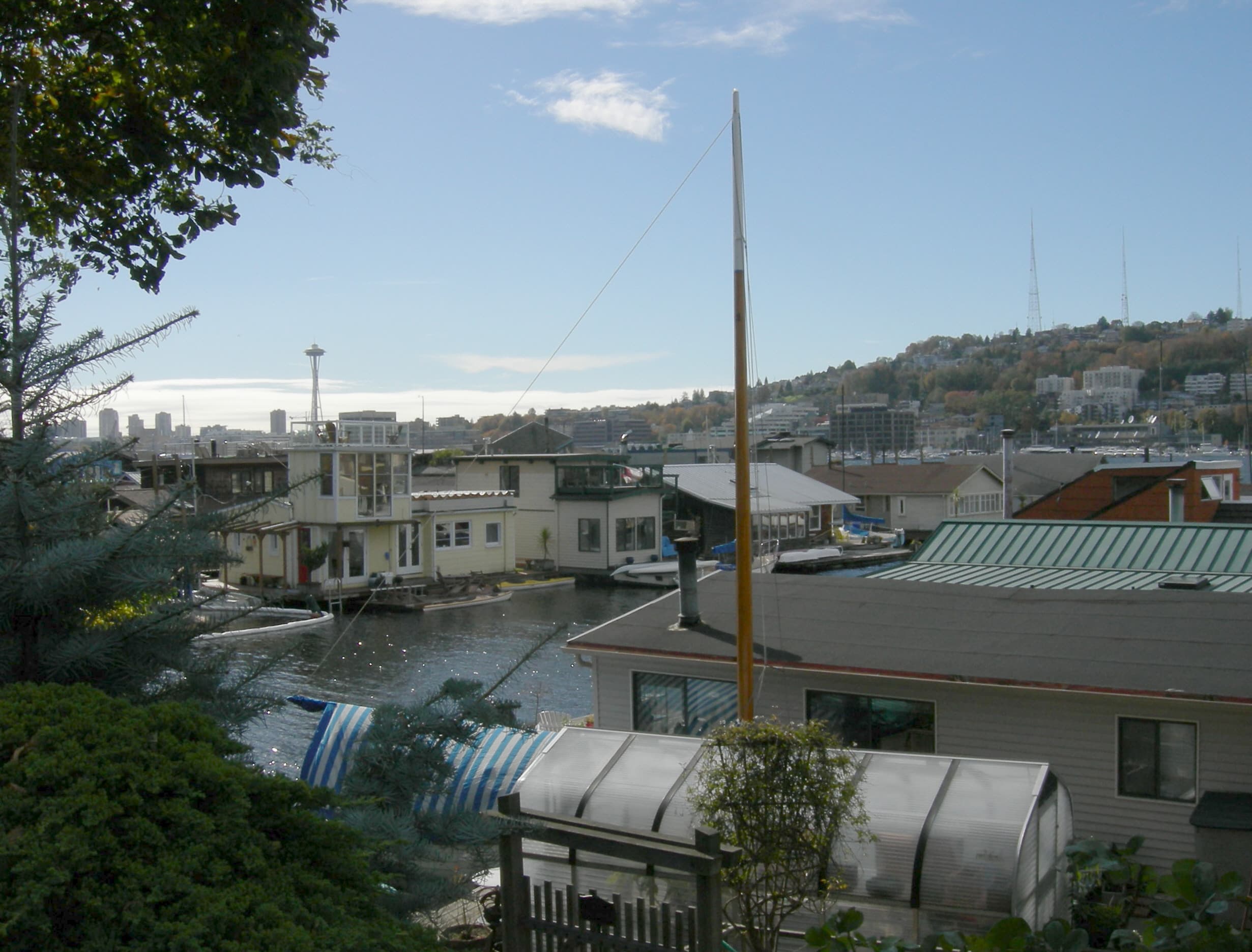
Photo: Joe Mabel, CC BY-SA 3.0, via Wikimedia Commons
Why Eastlake Moves Are Unique
Floating Home Access
Docks, not streets, lead to floating homes — a moving truck can only get so close, and the rest is a hand-carry down the dock.
A Genuinely Narrow Neighborhood
Eastlake is barely four blocks wide for most of its length, squeezed between I-5 and the lake — there's not much room for parking or truck staging anywhere.
No Dominant Building Type
Small apartment buildings, older houses, modern condos, and floating homes all sit within blocks of each other, each with completely different access.
The Cheshiahud Lake Union Loop
The 6-mile trail around the lake runs right through Eastlake, bringing steady foot and bike traffic along the waterfront on nice days.
Eastlake Building Types & What to Expect
🛶 Floating Homes & Houseboats
Accessed by dock, not by street. A truck parks at the head of the dock and the crew hand-carries everything the rest of the way — sometimes a considerable distance.
Moving difficulty: ⭐⭐⭐⭐ (High) — Genuinely different from a standard move; confirm dock length and any weight or access restrictions with the dock association first.
🏢 Small Apartment Buildings & Low-Rise Condos
The most common Eastlake housing type — buildings from every decade, mostly without elaborate building management processes.
Moving difficulty: ⭐⭐ (Low–Medium) — Straightforward, though street parking is tight.
🏠 Older Houses
A scattering of older single-family homes tucked between the apartment buildings, some with water access or views.
Moving difficulty: ⭐⭐ (Low–Medium) — Standard for the era; check street width before moving day.
🏗️ Modern Townhomes & View Condos
Newer construction has filled in some lots, particularly with lake or skyline views.
Moving difficulty: ⭐⭐ (Low–Medium) — Modern access, though street parking near the water is still tight.
The Biggest Eastlake Moving Challenges
1. Dock Access for Floating Homes
A moving truck can't drive onto a dock. Everything past the head of the dock is a hand-carry, which takes real time depending on how far out the home sits.
How to handle it: Tell your movers the dock length and any restrictions before booking, and confirm the dock association's rules on move timing and truck staging.
2. Genuinely Tight Street Parking
With the neighborhood squeezed into a narrow strip, there's simply less street to go around — competition for parking is real throughout Eastlake, not just near the water.
How to handle it: Scout parking on your specific block the day before, especially if you're not right on the water.
3. I-5 Noise & On-Ramp Traffic
The freeway runs right along Eastlake's western edge, and the on/off ramps add traffic to the streets closest to it.
How to handle it: If your address is near an I-5 access point, avoid scheduling your move around rush hour.
4. Lake Union Loop Trail Traffic
The Cheshiahud Lake Union Loop runs along the waterfront and draws steady foot and bike traffic on nice days, right where floating home docks meet the street.
How to handle it: If you're moving into or out of a floating home on a weekend, expect more pedestrian traffic around the dock entrance.
Eastlake Areas — Quick Guide
Floating Home Docks
Along the Lake Union shoreline. Access is by dock, not street — confirm details with the dock association before moving day.
Eastlake Avenue Corridor
The neighborhood's commercial spine, lined with small apartment buildings and businesses. The busiest part of the neighborhood.
South Eastlake (near downtown/SLU)
Closest to South Lake Union and downtown. More newer construction, easier access to major roads.
North Eastlake (near the University Bridge)
Quieter, more residential blocks toward the north end of the neighborhood.
Moving to or From Eastlake?
We know Eastlake's floating home docks, narrow streets, and mixed building types. Get a free quote within 24 hours, no obligation.
Insider Tips for a Smooth Eastlake Move
Confirm dock access and rules before booking movers
If you're on a floating home, contact your dock association about truck staging, move timing, and any restrictions well before moving day.
Tell your movers the dock length
A short hand-carry and a long one are very different jobs. Give your movers an accurate sense of distance so they can plan crew size and time.
Scout parking on your specific block
Eastlake's narrow footprint means less parking overall, not just near the water. Check the day before rather than assuming.
Avoid I-5 rush hour if you're near an on-ramp
Streets closest to the freeway access points get busy at commute times.
Weekday moves are easier near the water
The Lake Union Loop Trail brings weekend crowds right past the floating home docks. A weekday move avoids the foot traffic.
Ask if your movers have floating home experience
Not every crew has done a dock move before. Experience here genuinely speeds things up.
What an Eastlake Move Actually Costs
Eastlake moves vary more by building type than almost any other Seattle neighborhood — a standard apartment move costs about what you'd expect, while a floating home move takes meaningfully longer.
| Move Type | Estimated Cost | Typical Duration |
|---|---|---|
| Studio/1-Bed apartment | $440–$660 | 2–3 hours |
| 2-Bed condo/apartment | $915–$1,525 | 3–5 hours |
| House | $1,220–$1,830 | 4–6 hours |
| Floating home/houseboat | $1,950–$3,510+ | 5–9 hours |
Note: Floating home moves cost more because of the hand-carry down the dock — the longer the dock, the more it adds. For full Seattle pricing, see our complete cost guide.
Frequently Asked Questions
Is Eastlake a good neighborhood to move to in 2026?▼
Eastlake is a thin ribbon of a neighborhood between I-5 and Lake Union, with water at the end of nearly every street and a genuine community of floating homes. It's walkable, close to downtown and South Lake Union, and has a character unlike anywhere else in Seattle — but it's also barely four blocks wide, so know what you're getting into.
What's it like to move into a houseboat or floating home?▼
Different from any other kind of move. Access is usually via a narrow dock, not a street, so a standard moving truck can only get so close. Movers typically hand-carry items down the dock, and moorage fees ($800–$2,500+/month) are a separate ongoing cost from the home itself.
What's parking like in Eastlake?▼
Tight. The neighborhood is narrow with a lot of multi-family housing and no shortage of competition for the limited street parking, especially near the floating home docks.
When's the best time to move in Eastlake?▼
Weekday mornings. If you're moving into a floating home, coordinate directly with the dock association or property manager about the best access window and any restrictions on truck staging.
Are Eastlake moves harder than South Lake Union?▼
Different rather than harder. South Lake Union is almost entirely modern towers with managed loading docks; Eastlake mixes small apartment buildings, older houses, and floating homes, so the logistics vary a lot more from address to address.
Get Movers Who Know Eastlake
Free quotes from movers experienced with floating homes, narrow streets, and Eastlake's mix of buildings. No spam, no obligation.
Written by the SeattleMoversGuide team
Local moving industry professionals who know Eastlake's floating homes and narrow streets. From dock moves to standard apartments — we've moved them all.