Columbia City Moving Guide
A National Register historic district with a village green at its center, a light rail station, and Rainier Avenue traffic to plan around. Here's your insider guide to moving in Columbia City.
Columbia City sits in the heart of the Rainier Valley, about six miles south of downtown along Rainier Ave S. It was founded in 1891 as an independent streetcar suburb, annexed by Seattle in 1907, and its core — the Columbia City Landmark District — has been protected on the National Register of Historic Places since 1980: more than 40 preserved early-1900s buildings around a "village green" anchored by a 1914 Carnegie library.
That history is part of what makes the neighborhood so walkable today, and it also means a fair number of the buildings you'll move in or out of are a century old — narrower original doorways and stairways than a modern build. Combine that with Rainier Ave S's steady traffic and a light rail station in the middle of it all, and timing matters more here than the physical logistics.
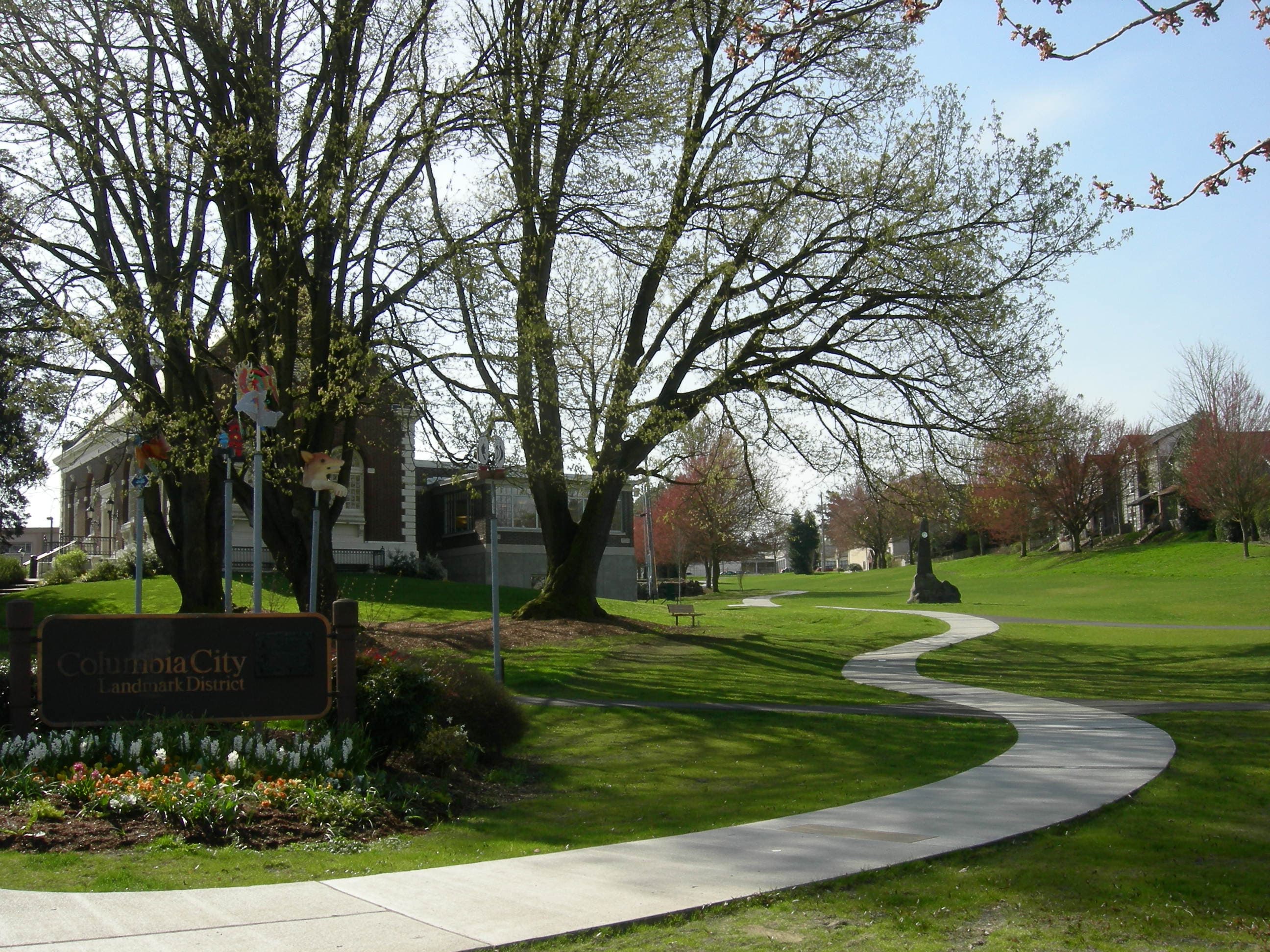
Photo: Joe Mabel, CC BY-SA 3.0, via Wikimedia Commons
Why Columbia City Moves Are Unique
A Century-Old Historic Core
The Landmark District's commercial buildings and homes date to the early 1900s. Charming, but narrower doorways and stairways than a modern building are common.
Rainier Avenue Traffic
Rainier Ave S is one of the busier arterials in South Seattle, especially at commute times. It's the main route through the neighborhood, so timing your move around it matters.
Light Rail Station in the Core
Columbia City Station puts downtown about 12 minutes away, which is great for residents but adds commuter parking pressure right around the historic core.
A Lively, Compact Main Street
The village green, Columbia City Theater, and a strong restaurant scene mean the core street gets busy with foot traffic by evening — narrower margins for a moving truck to work in.
Columbia City Building Types & What to Expect
🏛️ Landmark District Buildings (Early 1900s)
Mixed commercial and residential buildings right in the historic core — brick construction, narrower original doorways, and limited loading space directly on the main street.
Moving difficulty: ⭐⭐⭐ (Medium) — Charming but tight; confirm doorway and stairway widths ahead of time.
🏠 Craftsman Houses (Surrounding Blocks)
The residential streets around the historic core follow the same early-20th-century pattern as much of Seattle — Craftsman houses with basements and street parking.
Moving difficulty: ⭐⭐ (Low–Medium) — Standard for the era; budget time for a full basement.
🏢 Newer Apartments Near the Light Rail Station
Transit-oriented apartment buildings have been added near Columbia City Station in recent years — modern amenities, usually with an elevator and a defined loading area.
Moving difficulty: ⭐⭐ (Low–Medium) — The most straightforward building type in the neighborhood.
The Biggest Columbia City Moving Challenges
1. Rainier Avenue S Traffic
Rainier Ave S is one of the busiest corridors in the Rainier Valley, and it's the main route in and out of the neighborhood — congestion here directly affects how long a move takes.
How to handle it: Schedule your move outside the morning and evening commute windows whenever you can.
2. Narrow Historic Buildings
Some of the Landmark District's century-old buildings have narrower doorways, hallways, and stairs than a modern building — large furniture can be a tight fit.
How to handle it: Measure your largest pieces against the doorway before moving day, and let your movers know if you're in one of the district's original buildings.
3. Compact Main Street
The historic core is walkable and narrow by design, and it gets busy with restaurant and market crowds by evening — not much room for a truck to idle.
How to handle it: If your address is directly in the core, plan for a weekday morning move when foot traffic is lightest.
4. Station-Area Parking Pressure
Columbia City Station brings commuter park-and-ride traffic to the surrounding blocks on weekdays, competing with residential street parking.
How to handle it: If you're near the station, start early to beat the commute, or scout parking on your block the day before.
Columbia City Areas — Quick Guide
The Landmark District Core
Walkable, historic, and narrow by design. The village green, library, and Columbia City Theater anchor this stretch — plan around foot traffic and limited loading space.
Residential Blocks East & West of Rainier Ave
Craftsman-era houses on quieter streets, a short walk from the core. Generally the easiest moving logistics in the neighborhood.
Light Rail Station Area
The newest apartment construction in the neighborhood. Modern building access, but weekday commuter parking is competitive.
Moving to or From Columbia City?
We know Columbia City's historic buildings, Rainier Avenue traffic, and station-area parking. Get a free quote within 24 hours, no obligation.
Insider Tips for a Smooth Columbia City Move
Schedule around Rainier Ave S commute traffic
It's the main route through the neighborhood, and it gets slow at peak times. A mid-morning or early-afternoon move avoids the worst of it.
Measure doorways if you're in a Landmark District building
Some of the historic core's buildings have narrower original doorways and stairs. Check your largest furniture against them before moving day.
Avoid the core during evening restaurant hours
The village green area gets busy with foot traffic by early evening. A morning move keeps the truck's loading space clear.
If you're near the station, start early
Commuter parking fills up fast on weekday mornings. Beating the rush makes a real difference in finding a spot for the truck.
Budget extra time for older Craftsman basements
Like most of Seattle's early-1900s housing stock, a full basement with original stairs is common — and it's usually the slowest part of the move.
Check the Columbia City events calendar
The neighborhood's farmers market and community events can affect street access in the core. Worth a quick check before locking in your date.
What a Columbia City Move Actually Costs
Columbia City moves generally track the Seattle average — the terrain is flat, but older historic buildings and Rainier Ave S traffic can add time.
| Move Type | Estimated Cost | Typical Duration |
|---|---|---|
| Studio/1-Bed apartment | $440–$660 | 2–3 hours |
| 2-Bed station-area apartment | $915–$1,525 | 3–5 hours |
| Landmark District building (narrow access) | $915–$1,525 | 3–5 hours |
| 2-Bed Craftsman house | $915–$1,525 | 3–5 hours |
| 3–4 Bed house | $1,950–$3,120 | 5–8 hours |
Note: Older Landmark District buildings with narrow access typically take longer than a comparably sized modern apartment. For full Seattle pricing, see our complete cost guide.
Frequently Asked Questions
Is Columbia City a good neighborhood to move to in 2026?▼
Columbia City is one of the most walkable, characterful neighborhoods in South Seattle — a National Register historic district with a preserved early-1900s main street, a light rail station, and a food and music scene that punches above its size.
What's parking like in Columbia City?▼
Tightest right in the Landmark District core around the village green and light rail station. Residential blocks a few streets off Rainier Ave S are noticeably easier.
Does the historic district affect moving logistics?▼
Mostly it means older buildings — narrower original doorways and stairways in some of the century-old structures. It doesn't restrict a normal residential move, but it's worth telling your movers if you're in one of the district's original buildings.
When's the best time to move in Columbia City?▼
Weekday mornings. Rainier Ave S carries heavy traffic at commute times, and the historic core gets busy with restaurant and market crowds by evening and on weekends.
Are Columbia City moves harder than Beacon Hill?▼
About the same, with less hillside grade. Columbia City is flatter than most of Beacon Hill — the bigger variable here is Rainier Ave S traffic rather than terrain.
Get Movers Who Know Columbia City
Free quotes from movers experienced with Columbia City's historic buildings and Rainier Avenue traffic. No spam, no obligation.
Written by the SeattleMoversGuide team
Local moving industry professionals who know Columbia City's historic buildings, streets, and traffic patterns. From century-old storefront apartments to new station-area buildings — we've moved them all.