Belltown Moving Guide
Glass condo towers, a freight elevator you have to reserve, and some of the tightest parking downtown. Here's your insider guide to moving in Belltown.
Belltown sits between the Seattle Center and Elliott Bay, and it's about as dense and walkable as Seattle gets — a Walk Score of 98, a wall of glass condo towers, and a restaurant and nightlife scene that runs late. Almost nobody here has a yard, a driveway, or a basement.
What that means for moving day: the building matters more than the street. Nearly every tower requires a reserved freight elevator and loading dock window, and getting that piece wrong is the single most common reason a downtown move runs late.
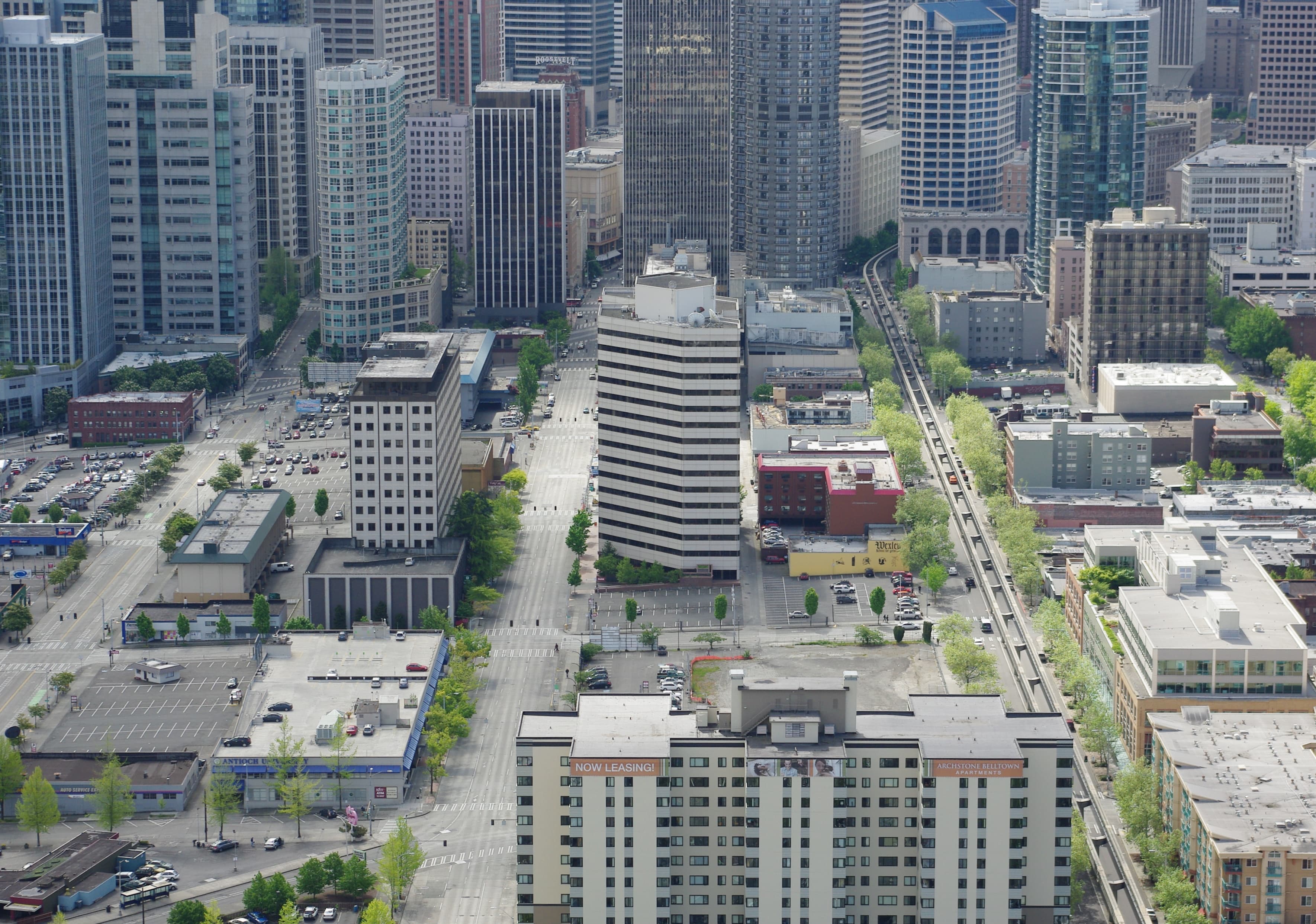
Photo: M.O. Stevens, CC BY-SA 3.0, via Wikimedia Commons
Why Belltown Moves Are Unique
Almost Entirely High-Rise
Belltown is one of the densest residential neighborhoods in Seattle. Nearly every address is a mid- or high-rise tower, which means the move runs through building management, not a front door.
Freight Elevator Reservations
Most buildings require booking the freight elevator and loading dock ahead of time, often with a certificate of insurance from your moving company. Skip this step and the move can stall before it starts.
Scarce, Expensive Parking
Secured parking can run up to $250 a month, and street parking is metered and competitive all day. The loading zone at your building is what actually matters on moving day.
Nightlife & Event Traffic
Belltown's restaurant and bar scene runs late, and downtown events add unpredictable congestion. A weekday morning avoids most of it.
Belltown Building Types & What to Expect
🏙️ Modern High-Rise Condo Towers (2000s–Present)
The dominant Belltown building type — 15 to 40+ stories, dedicated freight elevator, and a management office that runs a strict reservation process for moves.
Moving difficulty: ⭐⭐ (Low–Medium) — Straightforward once the elevator is booked; the paperwork matters more than the physical move.
🧱 Older Brick Apartments & Loft Conversions (Pre-1970s)
A smaller share of Belltown's buildings predate the condo boom — converted warehouses and older low-rise apartments, some with smaller or no elevators and narrower hallways.
Moving difficulty: ⭐⭐⭐ (Medium) — Less predictable than a modern tower; confirm elevator size and hallway width ahead of time.
🏬 Luxury Amenity Towers (Newest, Denny Triangle border)
The newest towers near Belltown's northern edge lean upscale, with concierge-coordinated move-ins, stricter certificate-of-insurance requirements, and tighter move windows.
Moving difficulty: ⭐⭐ (Low–Medium) — Smooth once approved, but the approval process itself takes the most lead time of any Belltown building type.
The Biggest Belltown Moving Challenges
1. Missing the Loading Dock Reservation
Most Belltown towers won't let a moving crew use the freight elevator without a reservation and a certificate of insurance on file — arriving without one can delay a move by hours.
How to handle it: Contact building management at least two weeks ahead. Get the exact move window, elevator reservation process, and COI requirements in writing, and share them with your movers.
2. No Street Parking to Fall Back On
Unlike a residential neighborhood, there's no quiet side street to double-park on. Metered spots and loading zones are shared with delivery trucks and rideshare pickups all day long.
How to handle it: Confirm your building's designated loading zone in advance, and have your movers arrive with enough buffer time to circle if it's occupied.
3. One-Way Streets & Downtown Congestion
Belltown's grid has several one-way streets, and downtown event traffic can back things up with little warning, especially near Seattle Center.
How to handle it: Check for events on your moving date and plan the truck's route in advance rather than relying on GPS in the moment.
4. Evening & Weekend Nightlife Traffic
Belltown's restaurant and bar scene picks up by late afternoon and stays busy into the night, making loading zones harder to hold and streets more congested.
How to handle it: Book the earliest move window your building allows — mornings are dramatically quieter than evenings.
Belltown Areas — Quick Guide
Lower Belltown (near the waterfront)
Closer to Elliott Bay and the Pike Place Market border. Older buildings mixed with newer towers, and more tourist foot traffic to plan around.
2nd & 3rd Avenue Corridor
The busiest stretch for nightlife and restaurant traffic. Evening and weekend moves are noticeably harder here than a weekday morning.
Upper Belltown (Denny Triangle border)
The newest luxury towers, closest to South Lake Union and Amazon's campus. Strict, concierge-managed move-in processes are the norm.
1st Avenue Edge
A mix of older mid-rise buildings and art galleries. Some of Belltown's least predictable elevator situations are here — always confirm ahead of time.
Moving to or From Belltown?
We know Belltown's freight elevator paperwork, loading dock rules, and downtown traffic patterns. Get a free quote within 24 hours, no obligation.
Insider Tips for a Smooth Belltown Move
Book your building's freight elevator at least two weeks out
This is the single most common reason a Belltown move gets delayed. Confirm the reservation process, move window, and any certificate-of-insurance requirement well ahead of time.
Get your loading dock rules in writing
Approved hours, weight limits, and any protective padding requirements for the elevator — get all of it confirmed with building management, and pass it to your movers.
Move on a weekday morning
Nightlife and restaurant traffic pick up by mid-afternoon and make loading zones much harder to hold. Mornings are dramatically easier.
Check for downtown events on your moving date
Seattle Center events and other downtown gatherings can affect traffic and street closures near Belltown with little advance notice.
Confirm your certificate of insurance requirement early
Many buildings require a COI naming the building as an additional insured before they'll release an elevator reservation. Ask your moving company to have this ready in advance.
If you're in an older building, measure the elevator
Not every Belltown building has a large freight elevator. For older conversions, confirm the elevator's interior dimensions before moving large furniture.
What a Belltown Move Actually Costs
Belltown moves run in line with, or slightly above, the Seattle average — there's no basement or yard to slow things down, but building paperwork and elevator scheduling can add time.
| Move Type | Estimated Cost | Typical Duration |
|---|---|---|
| Studio/1-Bed high-rise condo | $440–$660 | 2–3 hours |
| 2-Bed high-rise condo | $915–$1,525 | 3–5 hours |
| Older loft/apartment conversion | $915–$1,525 | 3–5 hours |
| Luxury tower (concierge move-in) | $915–$1,525 | 3–5 hours |
| 3+ Bed penthouse/large unit | $1,950–$3,120 | 5–8 hours |
Note: Buildings that require a certificate of insurance or a longer elevator booking window can add administrative time, though not necessarily cost. Downtown parking or loading-zone permits, if needed, are an added out-of-pocket cost. For full Seattle pricing, see our complete cost guide.
Frequently Asked Questions
Is Belltown a good neighborhood to move to in 2026?▼
Belltown is one of the most walkable neighborhoods in the country (Walk Score 98) — dense high-rise condos, an energetic restaurant and nightlife scene, and a short walk to the waterfront and Seattle Center. The trade-off is scarce, expensive parking and a move that runs through a building's freight elevator, not a driveway.
What's parking like in Belltown?▼
Limited and pricey — secured covered parking can run up to $250/month, and street parking is metered and competitive throughout the day. For moving day specifically, the loading zone or dock at your building matters far more than street parking.
Do Belltown high-rises require a loading dock reservation?▼
Almost always. Most towers require booking the freight elevator and loading dock in advance, plus a certificate of insurance from your moving company. Contact building management at least two weeks out to get the exact process.
When's the best time to move in Belltown?▼
Weekday mornings, outside of rush hour. Evenings and weekends bring restaurant and nightlife traffic that makes loading zones harder to hold, and downtown event traffic can affect the surrounding streets with little notice.
Are Belltown moves harder than a typical Seattle neighborhood?▼
Different, not necessarily harder. There's no basement or yard to worry about, but nearly every move depends on booking a freight elevator and loading dock correctly — miss that step and the move can't start on time.
Get Movers Who Know Belltown
Free quotes from movers experienced with Belltown's freight elevators, loading docks, and downtown traffic. No spam, no obligation.
Written by the SeattleMoversGuide team
Local moving industry professionals who know Belltown's towers, loading docks, and building management processes. From studio condos to full-floor penthouses — we've moved them all.